







Vision that blurs and clears when you blink: what it means
Blur that resets with a blink behaves differently from blur caused by your prescription. Telling them apart decides whether you need drops, an eye test, or something more urgent.
Shop dry eye relief When to get checkedQuick answer
If a blink sharpens your vision and it drifts again within seconds, the tear film is the likely cause rather than your prescription. That pattern responds to preservative-free drops used on a schedule, and it usually improves within two weeks. Blur that a blink does not touch, blur that is sudden, blur in one eye, or blur with pain, flashes or floaters is a different matter and needs prompt assessment rather than a product.
Key takeaways
- The tear film is the first surface light passes through, so its condition affects vision directly.
- The blink test is the fastest self-check. Blur that clears on blinking points to the tear film.
- Prescription blur is steady. Tear film blur fluctuates minute to minute.
- Dry eye can distort a sight test, which is why treating the surface before testing matters.
- Sudden blur, one-sided blur, flashes, floaters or a curtain across vision are urgent, not routine.
The blink test
This costs nothing and separates the two most common explanations faster than anything else.
Blur clears when you blink
Points to the tear film. A blink resurfaces the eye with a fresh, even layer, so vision sharpens. As that layer thins again the blur returns, often within ten to twenty seconds.
Blur does not change when you blink
Points away from the tear film. A steady, unchanging blur is more consistent with a refractive change, a lens change, or something inside the eye, and it needs testing rather than drops.
The Tear Film and Ocular Surface Society Dry Eye Workshop III report (TFOS DEWS III, published in the American Journal of Ophthalmology in 2025) centers its definition of dry eye on a loss of homeostasis of the tear film. Because that film is the outermost surface light must cross before reaching the eye, an uneven or rapidly breaking film scatters light before any other part of the visual system is involved.
Which pattern matches yours?
Blur is one symptom where the wrong assumption wastes the most time, so it is worth being deliberate.
| What you notice | More likely | What to do |
|---|---|---|
| Clears on blinking, returns in seconds, both eyes | Tear film instability | Scheduled preservative-free drops, two week trial |
| Steady blur, same all day, unchanged by blinking | Refractive or lens change | Book a sight test |
| Worse for near work by evening, fine in the morning | Reduced blinking during focus | Blink breaks and drops before symptoms start |
| Sudden, one eye, or with flashes, floaters or a shadow | Neither of the above | Urgent assessment the same day |
If it is the tear film, stabilize it
The goal here is a film that holds between blinks rather than one that breaks up seconds after each one.
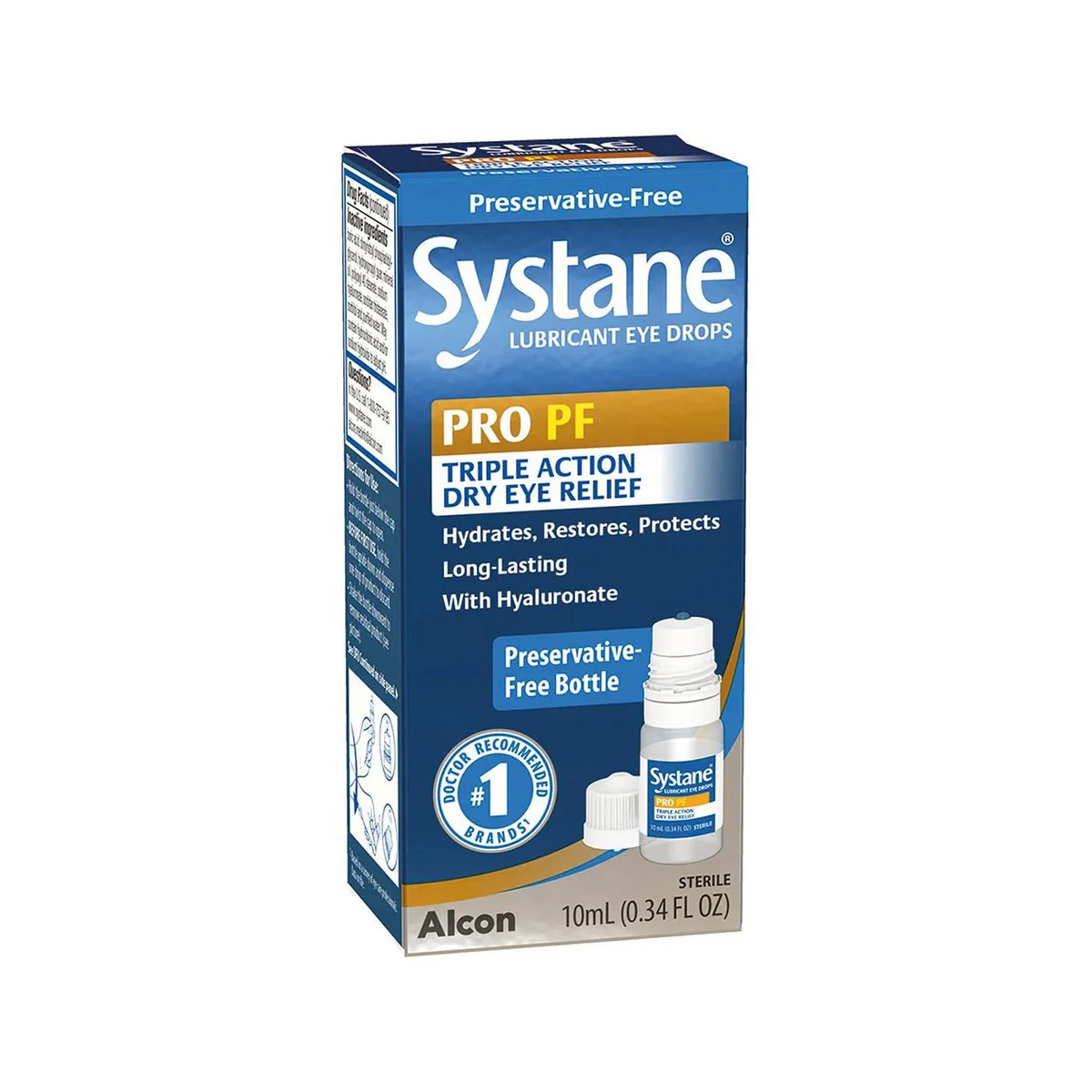
Systane PRO preservative-free, 10ml bottle
A preservative-free multi-dose bottle suits the dosing frequency this pattern usually needs, without carrying vials through the day.
View product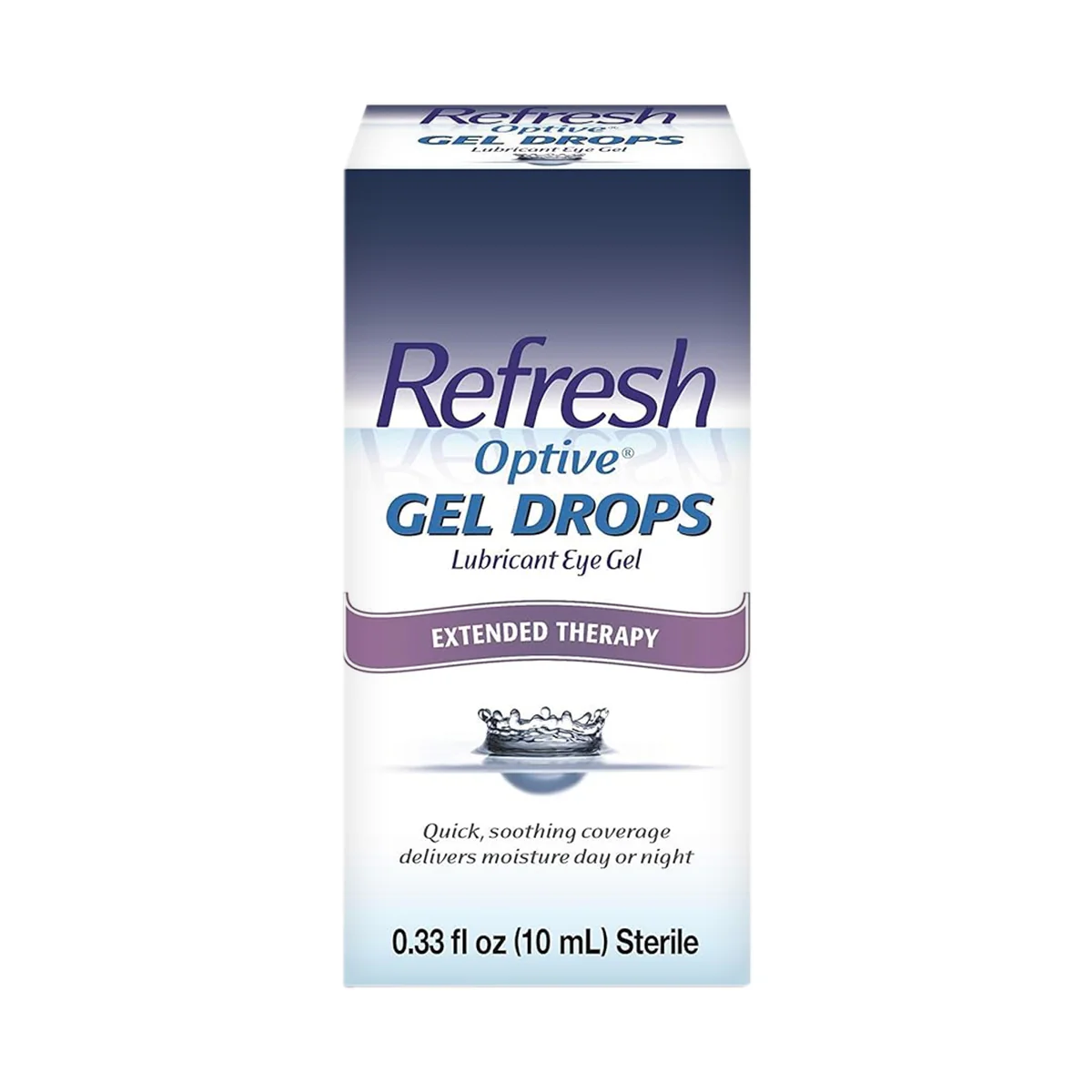
Refresh Optive gel drops
A thicker gel drop holds on the surface longer. Worth trying when a standard drop sharpens vision for only a few minutes.
View product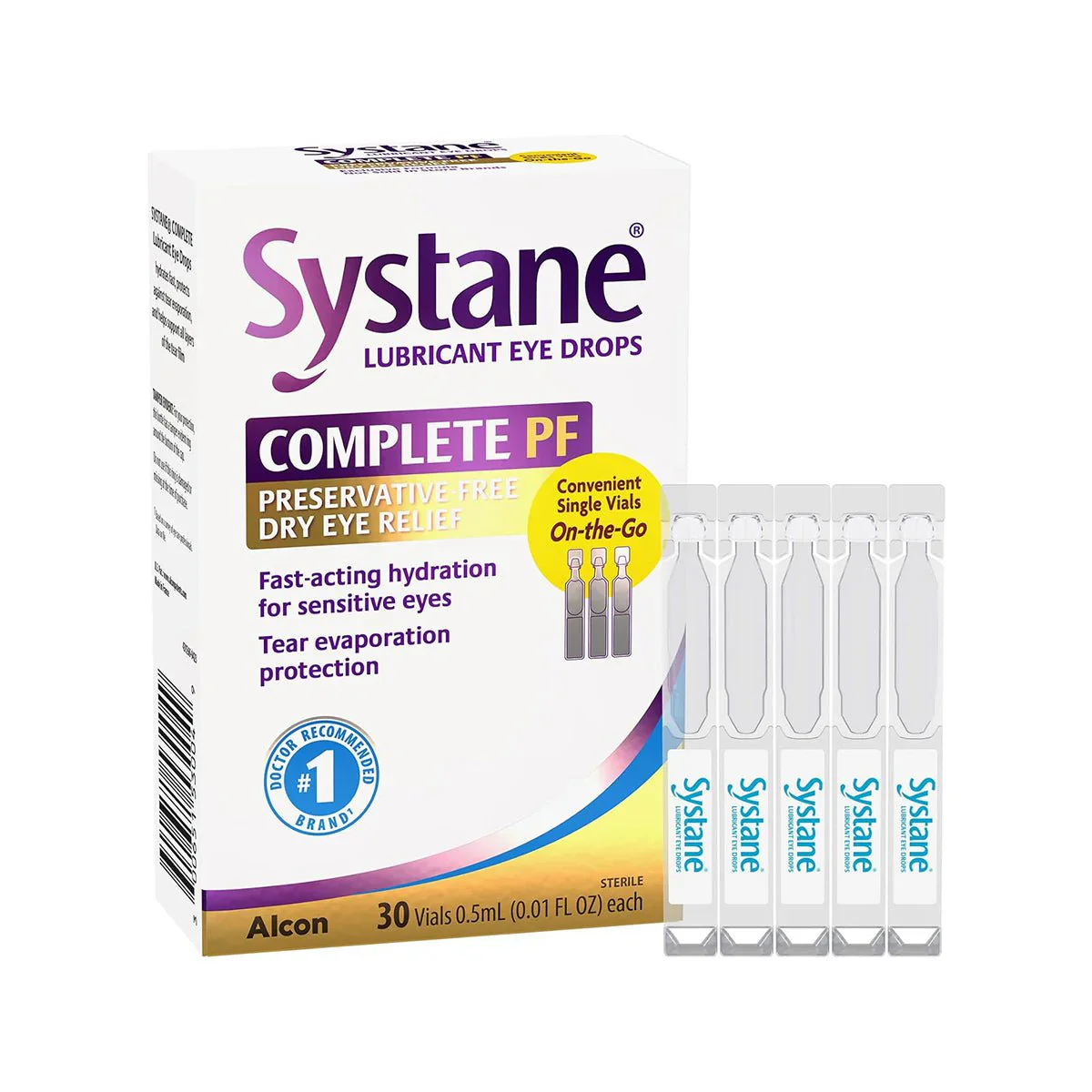
Systane Complete preservative-free, 30 vials
Formulated around tear evaporation, which is the mechanism behind a film that breaks up quickly between blinks.
View productOne thing worth getting right
If you are due a sight test and your eyes have been dry, treat the surface for a fortnight first. An unstable tear film can shift a measured prescription, and a test taken on a bad day can send you home with lenses that feel wrong once your eyes settle. Mention the dryness at the appointment either way.
When to stop self-treating and book an exam
Blurred vision covers a much wider range of causes than the other dry eye symptoms, and a few of them are time critical. Seek assessment promptly if any of these apply.
- Blur came on suddenly, particularly in one eye.
- You see new flashes of light, a shower of floaters, or a shadow or curtain across part of your vision.
- Blur comes with eye pain, headache, haloes around lights, or nausea.
- Vision does not change at all when you blink.
- Two weeks of consistent drops have made no difference.
Sudden vision loss, flashes with floaters, or a curtain across the visual field should be treated as an emergency rather than an appointment.
This article is for general education and is not medical advice. It does not replace an examination by a licensed eye care professional, and it cannot account for your individual history. Sudden or severe vision changes, flashes, floaters, or loss of part of your visual field require urgent assessment.
All trademarks are the property of their respective owners.
Common questions
Why does my vision clear for a moment when I blink?
Because a blink resurfaces the eye. It sweeps a fresh, even layer of tears across the front of the eye, and for a few seconds that layer is smooth enough to focus light cleanly. As it thins and breaks into patches, light scatters again and the blur returns. The cycle repeating every few seconds is characteristic.
Could I just need a new glasses prescription?
Possibly, and the two are easy to confuse because both make things less sharp. The distinguishing feature is stability. A prescription change produces blur that is consistent through the day and unchanged by blinking. Tear film blur varies from minute to minute and responds to a blink. If yours is steady, book a sight test.
Can dry eye change the result of a sight test?
It can. Measurements are taken through the tear film, so an unstable surface can shift the numbers slightly and make results less repeatable. That is why it is worth treating obvious dryness before a test where possible, and worth mentioning it during the appointment so it can be taken into account.
Is it safe to drive when my vision fluctuates?
Use your judgement, and be conservative. Brief blur that clears with a blink is manageable for most people, but night driving is harder because pupils dilate and any scatter is magnified into glare and haloes. If you are unsure whether your vision meets the legal standard, do not drive until it has been checked properly.
Why is my vision worse by evening?
Sustained focus suppresses blinking, so the tear film has fewer chances to renew across the day. Add heating, air conditioning or a long stretch of near work and the surface is progressively less stable by evening. Vision that is reliably sharp in the morning and soft by six o'clock fits this pattern well.
Why is my vision blurriest first thing in the morning?
Overnight the eye produces very little tear volume, and if the lids do not seal completely the surface dries further while you sleep. Vision then needs a period of blinking to recover once you wake. Morning blur that eases within the first half hour fits this pattern, and it often responds to a thicker product used at bedtime rather than more drops during the day.
My eyes feel fine, so why is my vision not sharp?
Comfort and optical quality are not the same thing, and they can diverge. It is quite possible to have a tear film that breaks up quickly without registering much discomfort, particularly if corneal sensitivity is reduced. Vision can be the first noticeable sign rather than a late one.
What can I do in the moment when my vision blurs mid-task?
Stop and blink deliberately several times, fully closing the lids each time, since partial blinks during concentration are part of what caused it. Look at something distant for a few seconds. If you have drops with you, use them then rather than waiting for a break. That sequence takes about ten seconds and usually buys back a stretch of clear vision.
Which kinds of blurred vision need urgent attention?
Anything sudden, anything affecting one eye alone, and anything accompanied by flashes of light, a sudden increase in floaters, or a shadow moving across your field of view. Blur with significant pain, haloes around lights or nausea also belongs in that group. None of these are tear film patterns, and they are time sensitive, so they warrant same day assessment rather than a wait and see approach.
Run the blink test first
Clears with a blink means treat the tear film for two weeks. Unchanged by a blink means book a sight test instead. Sudden or one-sided means get seen today.
Shop dry eye relief