





Itchy eyes: telling allergy from dry eye, and treating the right one
Itch is the one dry eye symptom that usually is not dry eye. There is a simple self-check that points you to the answer, and the two conditions need different products.
Shop dry eye relief When to get checkedQuick answer
Intense itch usually means allergy rather than dry eye, and the two respond to different products. The most useful clue is what has happened when you have rubbed: allergic itch tends to get worse afterwards, while dryness-driven irritation often eases briefly. Allergic itch is best served by an antihistamine eye drop plus removing allergens from the lids and lashes. Dryness is served by lubrication. Many people have both at once, which is why treating only one often gives partial relief.
Key takeaways
- Itch is the signature symptom of eye allergy. Dry eye more typically burns, stings, or feels gritty.
- What happens after rubbing is the single most useful clue, and it points in opposite directions for the two conditions.
- Allergy is not only seasonal. Dust mites, pet dander and mold produce the same itch all year round.
- Allergy and dry eye frequently coexist and can worsen each other, so partial relief is a common experience.
- Allergens sit on the lids and lashes for hours. Removing them matters as much as treating the eye itself.
What happens when you rub
This is the self-check, and it works because the two conditions respond to rubbing in opposite directions.
Itch gets worse after rubbing
Points to allergy. Rubbing mechanically disturbs the cells that release histamine, so the itch intensifies rather than settling, often within a minute or two.
Irritation eases briefly after rubbing
Points to dryness. Rubbing provokes a burst of reflex tears, which temporarily wets a dry surface. The relief is short lived and the irritation returns.
To be clear, this is a description of what you have probably already noticed, not an instruction. Rubbing is worth avoiding either way. It inflames the surface, worsens allergic itch directly, and over years of hard rubbing it carries risks of its own.
Itching remains the hallmark sign of allergic conjunctivitis, a condition affecting up to 40 percent of the population, and treatment typically involves topical antihistamines and mast cell inhibitors. Source: Allergic Conjunctivitis, StatPearls, National Center for Biotechnology Information. Clinical guidance also notes that itch which is intense and worsens with rubbing points toward allergy, while itch that is briefly relieved by rubbing points toward dry eye.
Sorting out which one you have
Beyond the rubbing response, the pattern over time and the company the itch keeps are both informative.
| Clue | Leans allergy | Leans dry eye |
|---|---|---|
| Dominant sensation | Itch, sometimes intense | Burning, stinging, grittiness |
| After rubbing | Worse | Briefly better |
| Timing | Seasonal with pollen, or year round with dust and pets | Builds through the day, worse with screens |
| Company it keeps | Sneezing, blocked nose, swollen lids | Fluctuating vision, tired eyes |
| Discharge | Stringy and ropey | Watery or none |
If your answers land in both columns, that is a common and legitimate result rather than a failed test. Allergy and dry eye coexist often, and each makes the other harder to tolerate.
Three jobs, three products
Allergic itch responds to blocking the reaction, removing the trigger, and calming the surface. These cover the three.
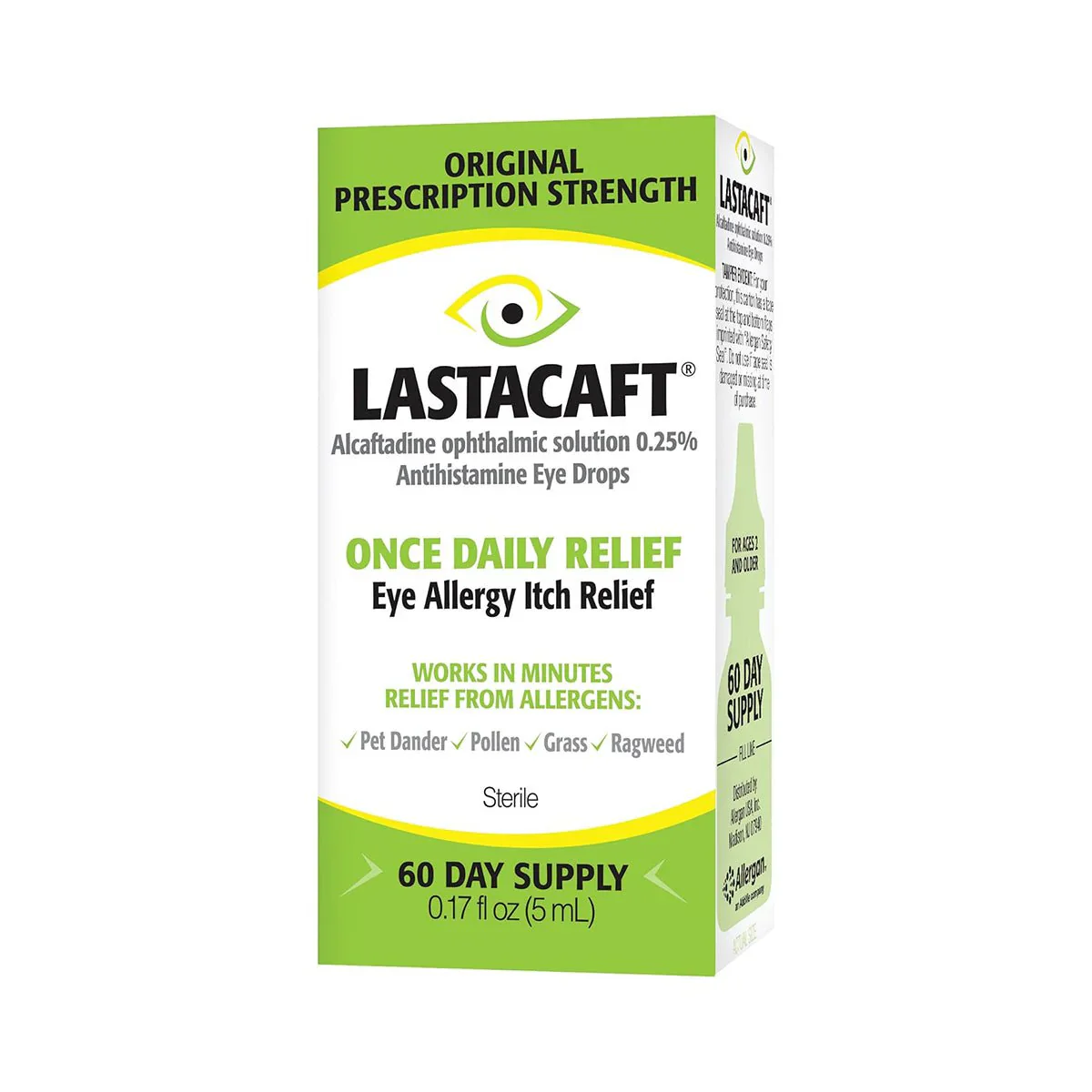
Lastacaft once daily allergy itch relief, 5ml
An antihistamine eye drop labeled to temporarily relieve itchy eyes due to pollen, ragweed, grass, animal hair and dander. Once daily dosing suits people who will not remember more.
View product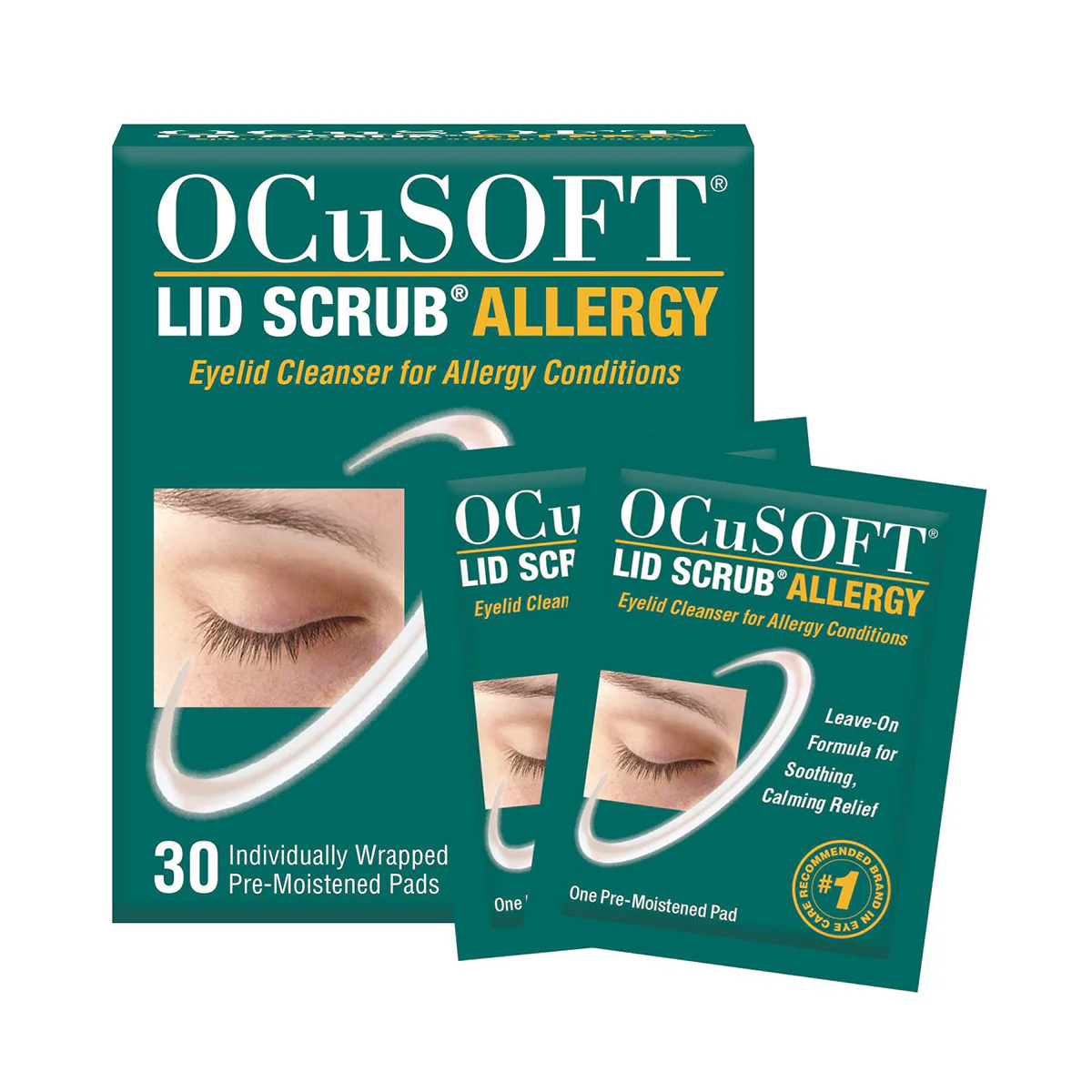
Ocusoft Lid Scrub allergy cleanser, 30 wipes
Pollen and dander settle on the lids and lashes and keep the reaction going for hours. Wiping them away addresses the supply rather than the symptom.
View product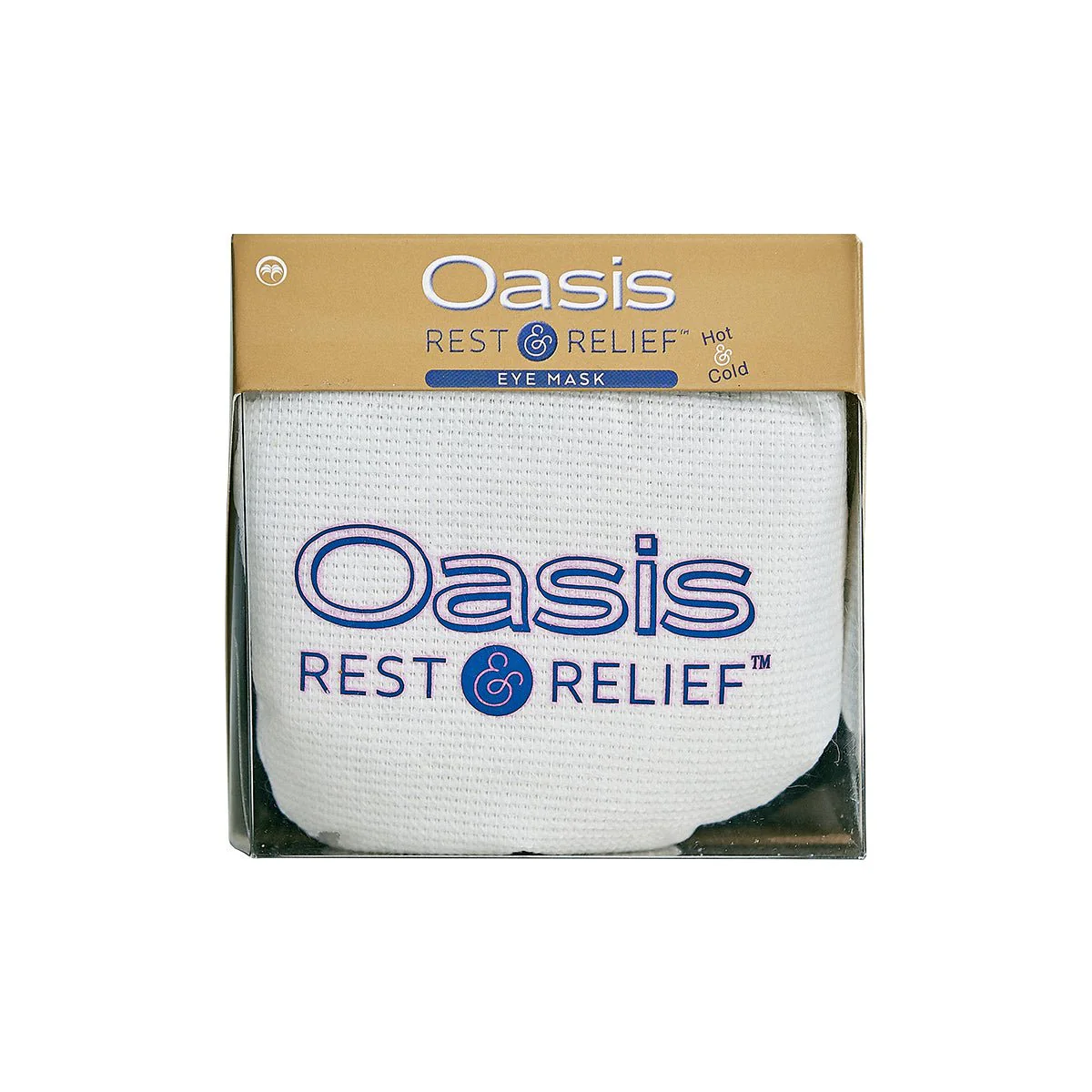
Oasis hot and cold mask
Used cold, it reduces the swelling and quiets the itch, which is often what breaks the rubbing cycle in the evening.
View productOne thing worth getting right
Allergen removal is the step people skip, and it is the cheapest one. Pollen lands on lashes, brows and hair during the day and transfers to the pillow at night, which is why symptoms often peak in bed rather than outdoors. Wiping the lids in the evening and rinsing your hair before sleeping changes the exposure rather than chasing the reaction.
When to stop self-treating and book an exam
Ordinary allergic itch is manageable at home. These patterns are not, and a few of them can threaten the surface of the eye.
- Itching with genuine pain, light sensitivity, or any change in vision.
- Thick or coloured discharge, rather than stringy clear mucus.
- Marked swelling of the lids, or swelling that is worsening rather than settling.
- Itch confined to one eye, particularly with redness.
- Two weeks of consistent antihistamine drops and lid cleaning with no improvement.
- Severe itching in a child, or any itching that is interfering with sleep or school.
Contact lens wearers with itching plus pain or light sensitivity should remove their lenses and be seen the same day.
This article is for general education and is not medical advice. It does not replace an examination by a licensed eye care professional, and it cannot account for your individual history. Always follow the labeled directions for any eye drop, and speak to a pharmacist or your eye doctor before combining products. If you have eye pain, vision changes, light sensitivity or discharge, seek care promptly.
All trademarks are the property of their respective owners.
Common questions
What separates an itchy eye from one that is just irritated?
Itch produces an urge to rub. Irritation produces an urge to blink or to close the eye. That distinction sounds slight and turns out to be quite reliable, because they arise through different pathways. If your instinct is to reach for your eyes rather than to rest them, allergy is the more likely driver.
Why do my allergy tablets settle my nose but not my eyes?
Oral antihistamines distribute through the whole body, and relatively little reaches the surface of the eye. They also tend to reduce tear production, so they can leave the eye drier while calming the nose. A drop applied directly to the eye delivers the effect where you need it without that trade off, which is why the two are often used together.
Can I use antihistamine eye drops and lubricating drops together?
Commonly yes, and it is a sensible combination when both conditions are present. Leave several minutes between them so the first is not immediately washed out by the second. Check the labeling on both products, and ask a pharmacist if you are unsure about a specific pair.
Is it safe to use antihistamine eye drops for months at a time?
Follow the directions on the label, which specify how long a product is intended for use without advice. Many people use them across a pollen season without difficulty. Needing them continuously all year, or finding they work less well over time, is worth raising at an appointment rather than simply continuing.
Can pets be the cause even though I have had them for years?
Yes. Sensitisation can develop at any point, so a pet you have lived with comfortably for a decade can become a trigger. Perennial allergy from dander, dust mites and mold produces the same itch as pollen but without the seasonal pattern, which is exactly why year round symptoms get misattributed to dryness.
Why is the itching worse once I am in bed?
Two reasons usually. Allergens collected on your hair and face during the day transfer to the pillow and sit close to your eyes for hours. And with nothing to distract you, an itch that was background noise during the day becomes the main event. Both are addressable, which is what makes an evening routine worthwhile.
Would showering before bed make a difference?
Often a noticeable one during pollen season. Rinsing your hair removes the pollen that would otherwise end up on the pillow, and changing pillowcases frequently helps for the same reason. It is unglamorous advice, and for people whose symptoms peak overnight it tends to outperform adding another product.
Can the itching come from my eyelashes rather than the eye itself?
It can. Inflammation at the lash line produces itching concentrated along the lid margin rather than across the eye, often worst on waking and accompanied by crusting or flaking. That pattern responds to lid cleaning rather than to antihistamines, which is a common reason allergy treatment appears to fail.
Do I need allergy testing, or is that overkill?
Not for most people. If symptoms follow an obvious seasonal pattern or a clear trigger, avoiding it and treating the eye is usually enough. Testing becomes more useful when symptoms are year round with no evident cause, when they are severe enough to affect sleep or work, or when standard treatment is not holding. That is a conversation for an appointment, since the results only help if someone interprets them alongside what your eyes actually look like.
Treat the one you actually have
Worse after rubbing means allergy, so block the reaction and clear the allergens. Briefly better means dryness, so lubricate. Both is common, and both need treating.
Shop eye care