





Watery eyes that still feel dry: what the tearing is telling you
Constant watering is usually a signal about tear quality, not tear quantity. Working out which of three things is driving it decides what to do next.
Shop dry eye relief When to get checkedQuick answer
Sort it into one of three buckets first. Watering that comes and goes, affects both eyes and pairs with stinging or grittiness is usually poor tear quality, and it responds to preservative-free drops plus warmth for the oil glands. Watering that runs constantly down one cheek regardless of how your eyes feel is more likely a drainage problem, and no drop will fix that. Watering with pain, light sensitivity or discharge is neither, and needs an exam. Most people fall into the first bucket.
Key takeaways
- Tears are produced by one system and drained by another, so watering can mean too many tears or too few leaving.
- Reflex tears are watery and thin. They flood the surface without protecting it, which is why the eye still feels dry.
- Adding drops when your eyes are already wet sounds wrong and usually helps, because it is quality you are correcting.
- Watering in one eye only, running constantly, points at drainage rather than dryness.
- Expect it to get better in steps rather than all at once. Reflex tearing settles after the surface does.
Three things that make eyes water
They feel similar and lead to completely different actions, so this is the part worth getting right before you buy anything.
Poor tear quality
The oily layer that slows evaporation is thin or missing, so tears break up quickly. The surface dries, the eye signals distress, and the gland responds with a flood of watery reflex tears.
Poor drainage
Tears leave through small openings at the inner corner of the lid. If those are narrowed or blocked, normal tear production overflows. Typically one eye, typically constant.
Irritation or allergy
An irritant, an allergen or a lid problem provokes tearing directly. Here the watering is a response to something identifiable rather than to dryness.
The Tear Film and Ocular Surface Society Dry Eye Workshop III report (TFOS DEWS III, published in the American Journal of Ophthalmology in 2025) makes explicit that dry eye is classified as a disease rather than a syndrome. That distinction matters here, because it frames persistent reflex tearing as part of an ongoing disease process on the ocular surface rather than as a harmless quirk.
Which bucket are you in?
Two questions usually settle it: how many eyes, and does it track with how your eyes feel.
| Pattern | Most likely | What helps |
|---|---|---|
| Both eyes, comes and goes, with stinging or grittiness | Tear quality | Preservative-free drops on a schedule, plus warmth for the oil glands |
| One eye, runs constantly, eye feels otherwise normal | Drainage | An exam. Drops will not address a blocked route out |
| Both eyes, seasonal, with itching | Allergy | Treat the allergy and the dryness together, not one instead of the other |
| Watering with pain, light sensitivity or discharge | Neither of the above | Prompt exam, remove contact lenses |
If it is tear quality, treat the oil layer as well as the surface
Drops replace what is missing. Warmth helps your own glands supply the oily layer that stops tears evaporating in the first place, which is the part that keeps reflex tearing coming back.
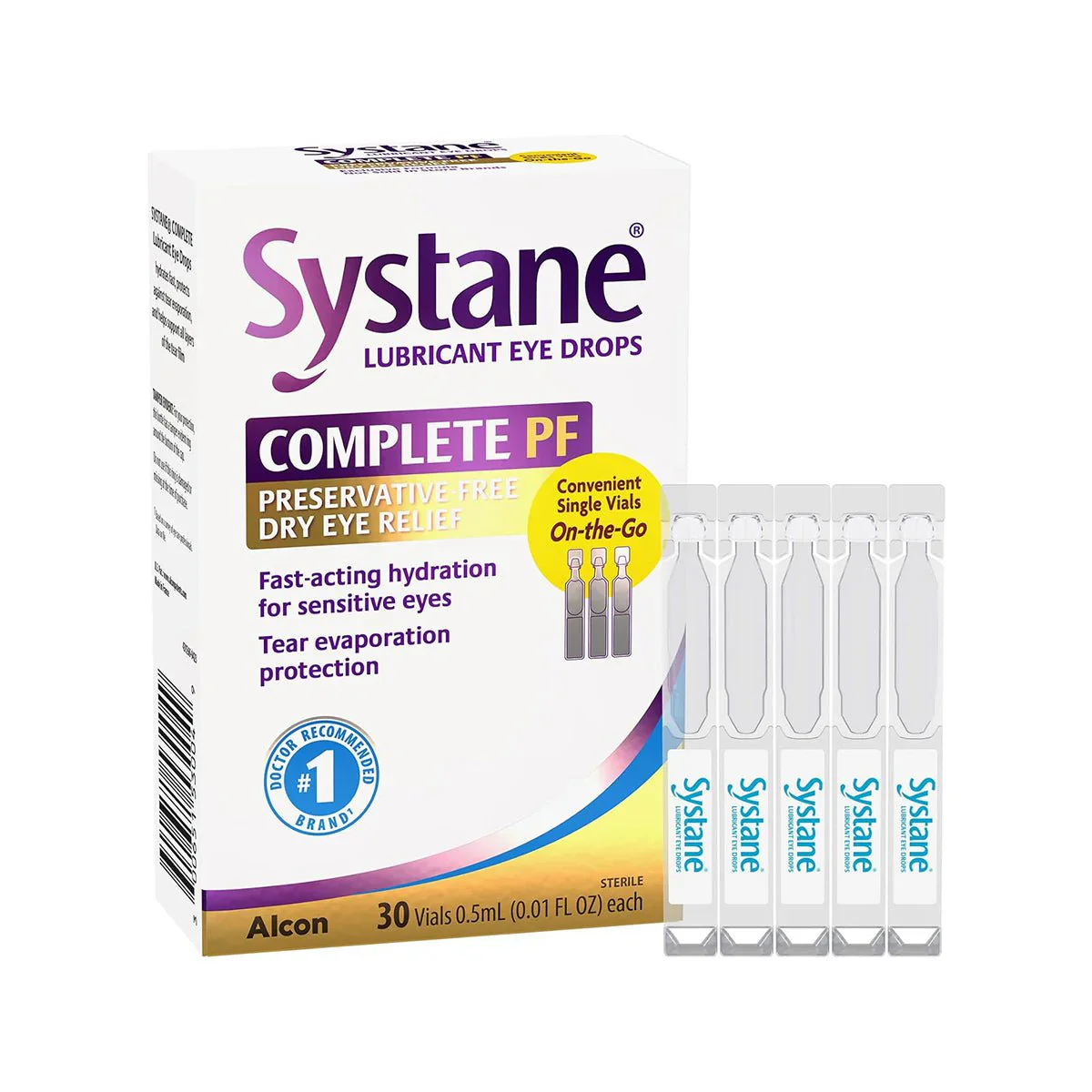
Systane Complete preservative-free, 30 vials
Formulated for tear evaporation rather than volume alone, which is the mechanism behind most watery-but-dry patterns.
View product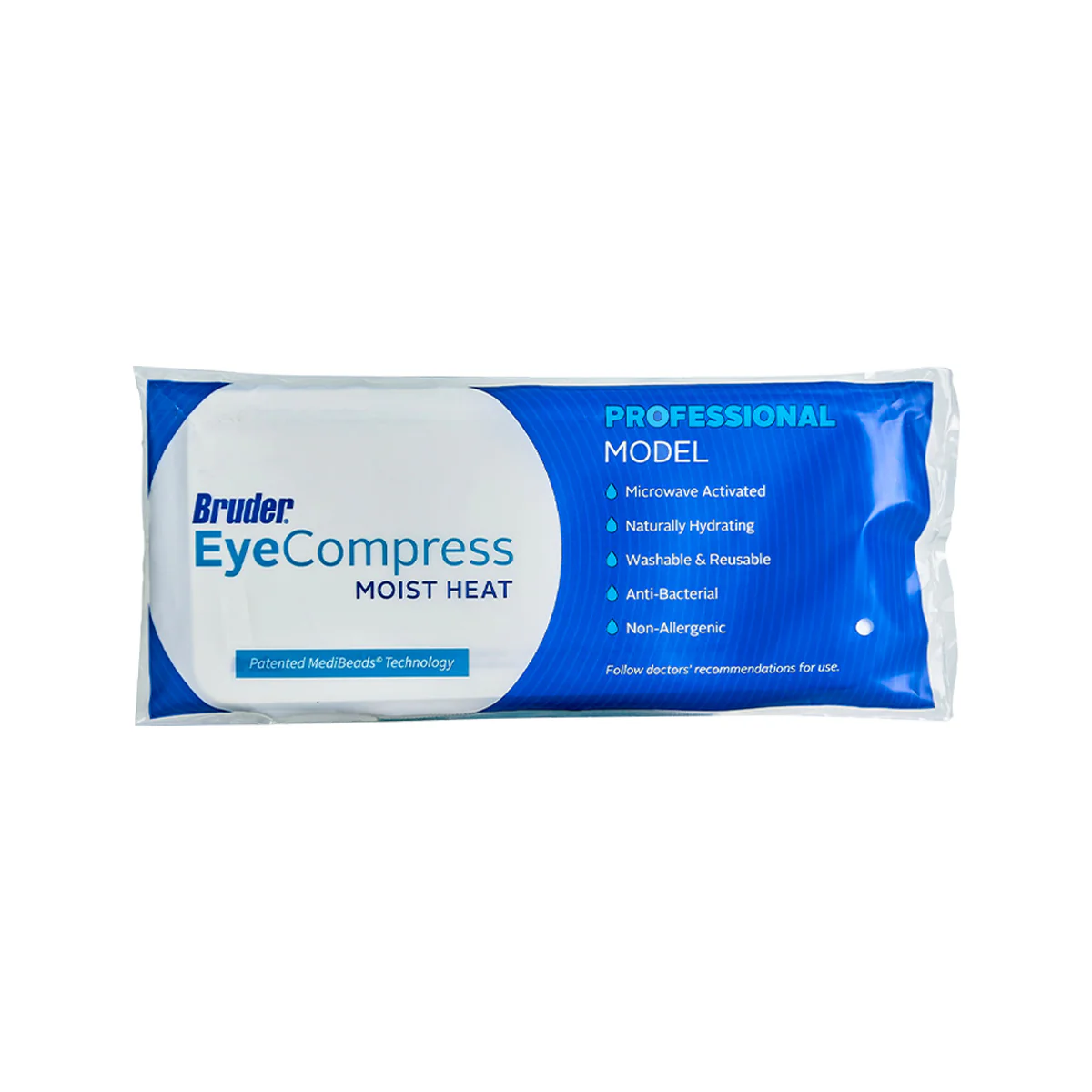
Bruder moist heat compress
Warmth softens thickened oil so the glands along the lid margin can flow again. Used daily, it addresses the cause rather than the overflow.
View product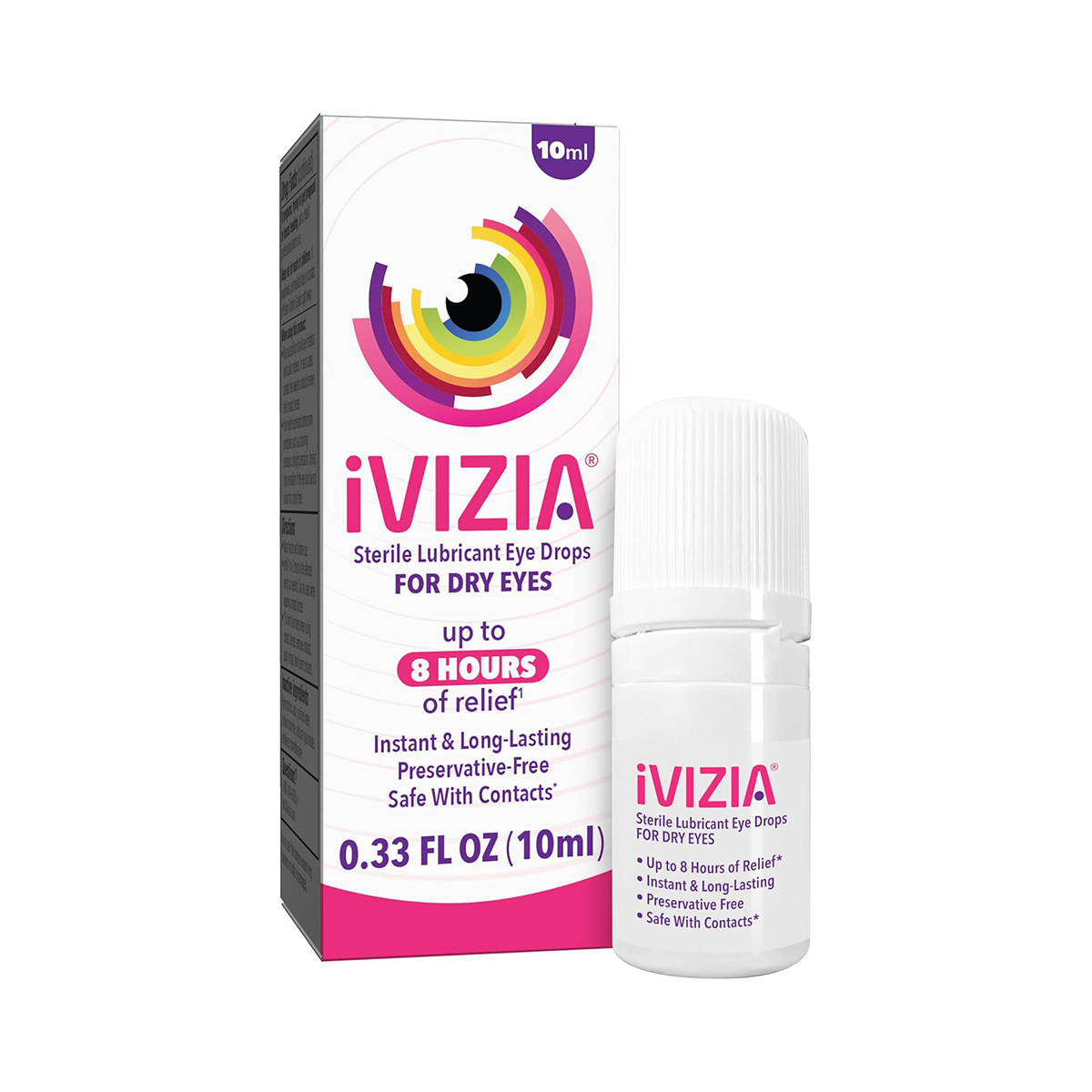
iVIZIA preservative-free, 10ml bottle
A multi-dose bottle for steady daytime dosing without carrying vials. Preservative-free and labeled contact lens friendly.
View productOne thing worth getting right
Most people stop after a few days because the watering appears unchanged, or briefly worse. That is the expected order of events. The surface settles first and the reflex response follows, so watering is a lagging indicator. Judge it at two weeks, not at three days.
When to stop self-treating and book an exam
Watering has one cause that no product addresses, so a persistent pattern deserves a look rather than a fourth bottle.
- One eye waters constantly and the eye itself feels normal.
- Tears run down the cheek regardless of environment or activity.
- There is pain, light sensitivity, or discharge rather than clear tears.
- The inner corner of the lid is swollen, tender or red.
- Two weeks of consistent drops and warmth have changed nothing.
Contact lens wearers with watering plus pain or light sensitivity should remove their lenses and be seen the same day.
This article is for general education and is not medical advice. It does not replace an examination by a licensed eye care professional, and it cannot account for your individual history. If you have eye pain, sudden vision changes, light sensitivity, or discharge, seek care promptly.
All trademarks are the property of their respective owners.
Common questions
Could a blocked tear duct be causing this instead?
It is the main alternative and worth ruling in or out early. Drainage problems usually affect one eye, produce steady overflow rather than episodes, and leave the eye feeling unremarkable between wipes. Dryness-driven watering tends to affect both eyes, fluctuate with environment, and come with stinging or grittiness. Drainage needs examining, since no drop opens a narrowed passage.
Do eye drops make sense if my eyes are already wet?
Usually yes, because you are not topping up volume, you are correcting quality. Reflex tears are thin and drain away quickly without holding on the surface. A lubricating drop provides the stability those tears lack, which is what eventually reduces the trigger for producing them.
Why does one eye water more than the other?
Mild asymmetry is common and not necessarily meaningful, since lid position and gland function vary between sides. A marked difference is more informative: one eye clearly worse, particularly with steady overflow, shifts suspicion toward drainage or a lid issue on that side rather than general dryness.
Will my eyes water more before they get better?
Sometimes, briefly. As the surface rehydrates it can remain sensitive for a while, and reflex tearing settles after the surface does rather than alongside it. A short period of no obvious change is normal and is not a reason to abandon a routine in the first week.
Could this be allergy rather than dryness?
Itching is the distinguishing feature. Allergic tearing usually arrives with a strong urge to rub, often seasonally, and frequently with a blocked or runny nose. Dryness-driven tearing tends to bring stinging or grittiness instead. The two commonly coexist, so treating one and ignoring the other often produces only partial relief.
Why does my vision blur when my eyes water?
Because an uneven film of tears scatters light before it reaches the eye. A thick pool of reflex tears is no better optically than a surface that is too dry, which is why vision can smear at exactly the moment your eyes feel wettest. It should clear within a blink or two. Blur that persists is worth an exam.
Is the position of my eyelids relevant?
Very. Lids need to sit flush against the eye to sweep tears toward the drainage openings. If a lid turns slightly outward or inward, that pump stops working properly and tears spill even when production is normal. This becomes more common with age, and it is the sort of thing an examination identifies quickly.
Does watering in cold wind mean the same thing?
Not necessarily. Streaming in cold wind is a normal protective reflex that almost everyone has, and on its own it says little. It becomes informative when the threshold drops, so a mild breeze or a walk to the car sets it off when it never used to. That shift suggests a surface that is already struggling.
When is watering worth an appointment rather than another product?
When the pattern points away from tear quality, or when a fair trial has not moved it. Constant one-sided overflow, an eye that feels normal apart from the wet cheek, tenderness at the inner corner, or two consistent weeks of drops and warmth with no change all fall into that category. Those are structural questions rather than product questions, and buying a different drop will not answer them.
Sort the pattern, then act on it
Both eyes and fluctuating means treat the tear film for two weeks. One eye and constant means get the drainage looked at instead.
Shop dry eye relief