Back to eye care services and treatments
Lens implant choices
Choose an implant that fits how you live.
During cataract surgery the cloudy lens is replaced with an implant, and some designs aim to cut down on glasses.

Every lens design has trade-offs.
Lenses with a wider range of focus can bring halos around lights at night. Others give crisp distance vision, but you may still reach for readers. A standard lens with glasses is a common choice too.
The main types of lens implants.
Standard monofocal
Clear at one distance, usually far.
Toric
Designed for eyes with astigmatism.
Trifocal
Near, middle and far focus in one lens.
Extended depth
A wider focus range, softer night effects.
Adjustable
Power fine-tuned with light after surgery.
Monovision
One eye set for distance, one for near.
Adjusted after surgery.
With a light adjustable lens, short light treatments fine-tune the lens once your eye settles. You wear UV-blocking glasses until they are done.
Who makes them.
Major makers include Alcon, Johnson & Johnson Vision, Bausch + Lomb and RxSight. Your surgeon works with the brands they trust.
Cost
Upgrades usually cost extra.
Insurance, including Medicare, generally helps with surgery using a standard lens. Lenses that aim to reduce glasses, and the extra testing they need, are usually paid out of pocket.
Comfortable eyes first.
Your eye doctor checks your overall eye health and tear film, since both can affect which lens fits best.
Questions to bring to your consult.
What do I do most?
Think about night driving, reading and screens.
Will I see halos?
Ask how likely glare is with each lens.
What will it cost?
Ask for a written quote for lens and testing.
Match the lens to your goal.
Your eye doctor knows your eyes.
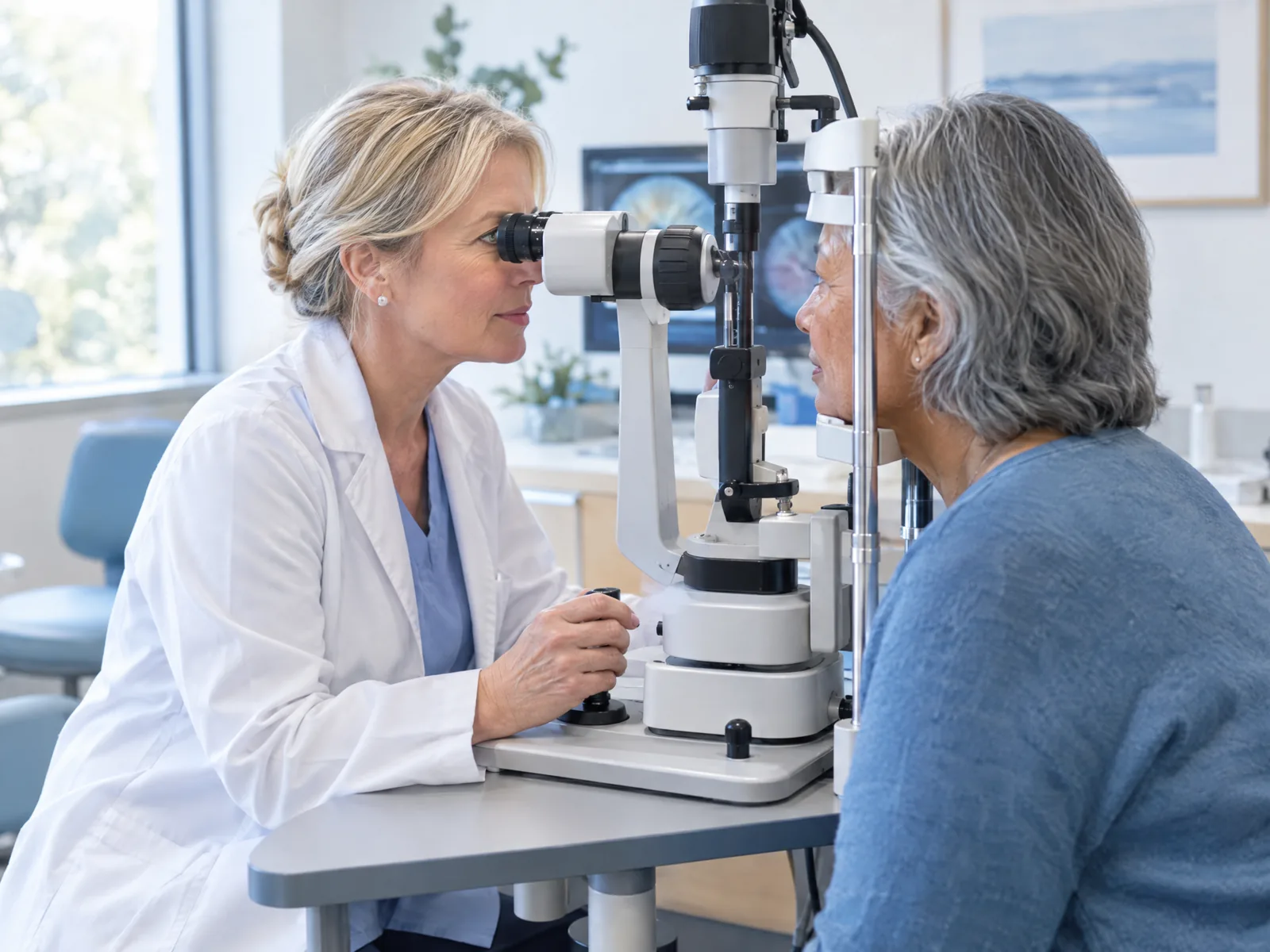
The doctor who has examined your eyes over the years can help you think through lens choices before you meet the surgeon.
Keep exploring.
Lens implant makers




Fast answers.
Will I be glasses-free?
No lens can promise that. Many people still use glasses for some tasks.
Can I get one without a cataract?
Yes, through refractive lens exchange, which uses the same lens choices.
Which lens is right for me?
There is no single right lens for everyone. It depends on your eyes and your goals.
Can toric lenses help with astigmatism?
They are designed for regular astigmatism. Your surgeon measures your eye to see if one fits.
Talk to an eye doctor about lens choices.
No single path is right for everyone. Your eye doctor will recommend what fits you. Use the Vision Rescue doctor locator to find an eye doctor near you.
Back to eye care services and treatments
Sources and notes
- CMS: Guidance on lens upgrades and laser-assisted cataract surgery (2012)
- Alcon: Extended depth of focus lens launch
- Johnson & Johnson Vision: TECNIS Odyssey launch, 2024
- National Eye Institute: Cataract surgery
- Clinic photos on this page are AI-generated illustrations. Device maker logos link to each company's website.
- Full source list: Vision Rescue sources
This page is for general education and is not medical advice. Only an eye care professional who has examined you can recommend what is right for your eyes.