Back to eye care services and treatments
Refractive lens exchange
Lens surgery before a cataract.
Refractive lens exchange replaces your clear natural lens with an implant to reduce your need for glasses. It uses the same steps and lens choices as cataract surgery.
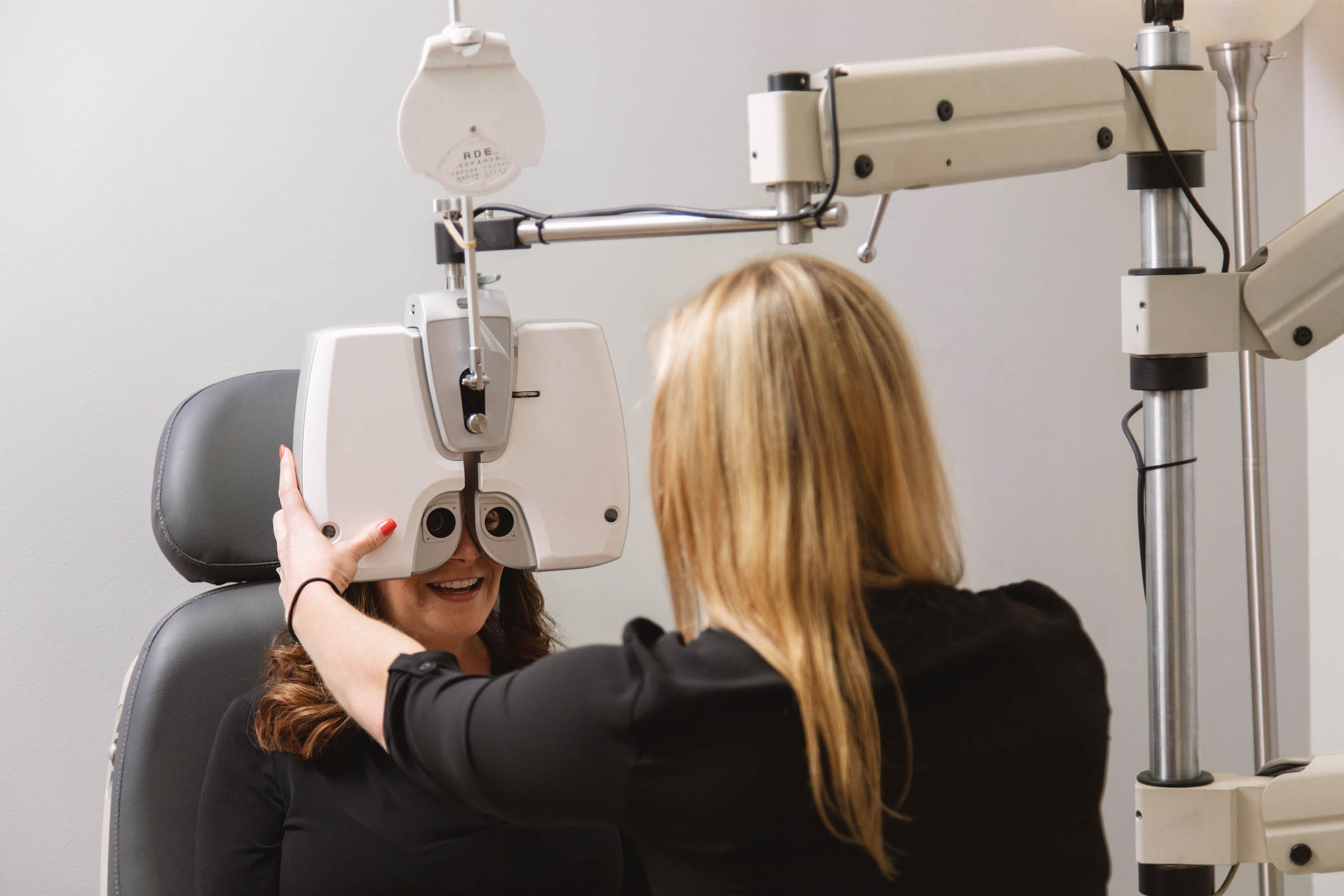
Lens exchange swaps a clear lens for an implant.
People who choose it are often over 40 and tired of readers, or have a strong prescription. Because the lens removed is healthy, the decision is about vision goals rather than a cataract.
What to weigh before lens exchange.
Reading glasses
Some implants aim to reduce the need for readers.
Strong prescriptions
May help very nearsighted or farsighted eyes.
Retina health
Very nearsighted eyes have a higher retinal risk.
No future cataract
The removed lens cannot form a cataract later.
Night halos
Some implants can cause glare around lights.
Usually self-pay
Without a cataract, it is elective surgery.
Retinal detachment is the key risk.
In one long-term study of very nearsighted eyes, 2 of 62 had a retinal detachment after lens exchange. Ask about your own risk.
Healing like cataract surgery.
Recovery follows the cataract surgery path. NEI says most people are completely healed 8 weeks after cataract surgery.
Before you decide
A dilated exam comes first.
Your eye doctor checks the retina closely and asks about any family history of retinal detachment before you see a surgeon.
Write down your goal.
Reading without glasses, driving at night or seeing far away each point to different lens choices.
Questions to ask about lens exchange.
Why not laser?
Ask why lens exchange suits you better than LASIK.
Which lens?
Ask which implant matches your goal.
What about my retina?
Ask how your retina affects the risk.
After lens exchange.
Your eye doctor helps you compare.
Lens exchange, LASIK and implantable lenses each fit different eyes. Your optometrist can help you narrow the list.

Keep exploring.
Fast answers.
Is this the same as cataract surgery?
The steps are the same, but the lens removed is clear rather than cloudy.
Does insurance pay for it?
Without a cataract it is usually considered elective and paid out of pocket. Check with the surgeon's office.
Who usually considers it?
Often people over 40 who want fewer glasses, or people with strong prescriptions. Your surgeon decides who qualifies.
Which warning signs matter?
Sudden flashes, many new floaters, a shadow over part of your vision or vision loss need a same-day call.
Talk to an eye doctor about lens exchange.
Find an eye doctor near you with the Vision Rescue doctor locator.
Back to eye care services and treatments
Sources and notes
- Horgan N, et al. Refractive lens exchange in high myopia, Br J Ophthalmol 2005
- National Eye Institute: Cataract surgery
- Exam-room and showroom photography are owned Eye Care Advisors assets approved for use by Vision Rescue.
- Full source list: Vision Rescue sources
This page is for general education and is not medical advice. Only an eye care professional who has examined you can recommend what is right for your eyes.