Back to eye care services and treatments
Diabetes and your eyes
Diabetic Eye Exam
Diabetes can damage the small blood vessels in the retina long before you notice a change in your sight. A yearly dilated eye exam is how problems get caught while treatment works best.
Once a year, even if you see fine.
Diabetic retinopathy usually has no early symptoms. The National Eye Institute advises people with diabetes to get a dilated eye exam at least once a year. Your doctor may ask you to come more often if changes are found.
What the exam looks for.
The visit focuses on the retina and the blood vessels that feed it.
Leaky vessels
Damaged vessels can leak fluid or blood into the retina.
Macular swelling
Fluid in the center of the retina can blur reading vision.
New vessels
Fragile new vessels can bleed and need prompt treatment.
Retina photos
Images record the retina so changes are easy to track.
Eye pressure
Diabetes raises the risk of glaucoma, so pressure is checked.
Lens clarity
Cataracts are more common and can form earlier.
No symptoms
Good vision does not rule it out.
Many people with diabetic retinopathy see well until the disease is advanced. The exam is how it gets found early.
Results go to your doctor
Ask your eye doctor to send the exam results to the clinician who manages your diabetes.
Your part between visits.
Blood sugar
Steady control lowers the chance of eye damage.
Blood pressure
Keeping it in range helps protect the retina too.
Report changes
Floaters, blur or dark areas need a call right away.
Three habits that protect your sight.
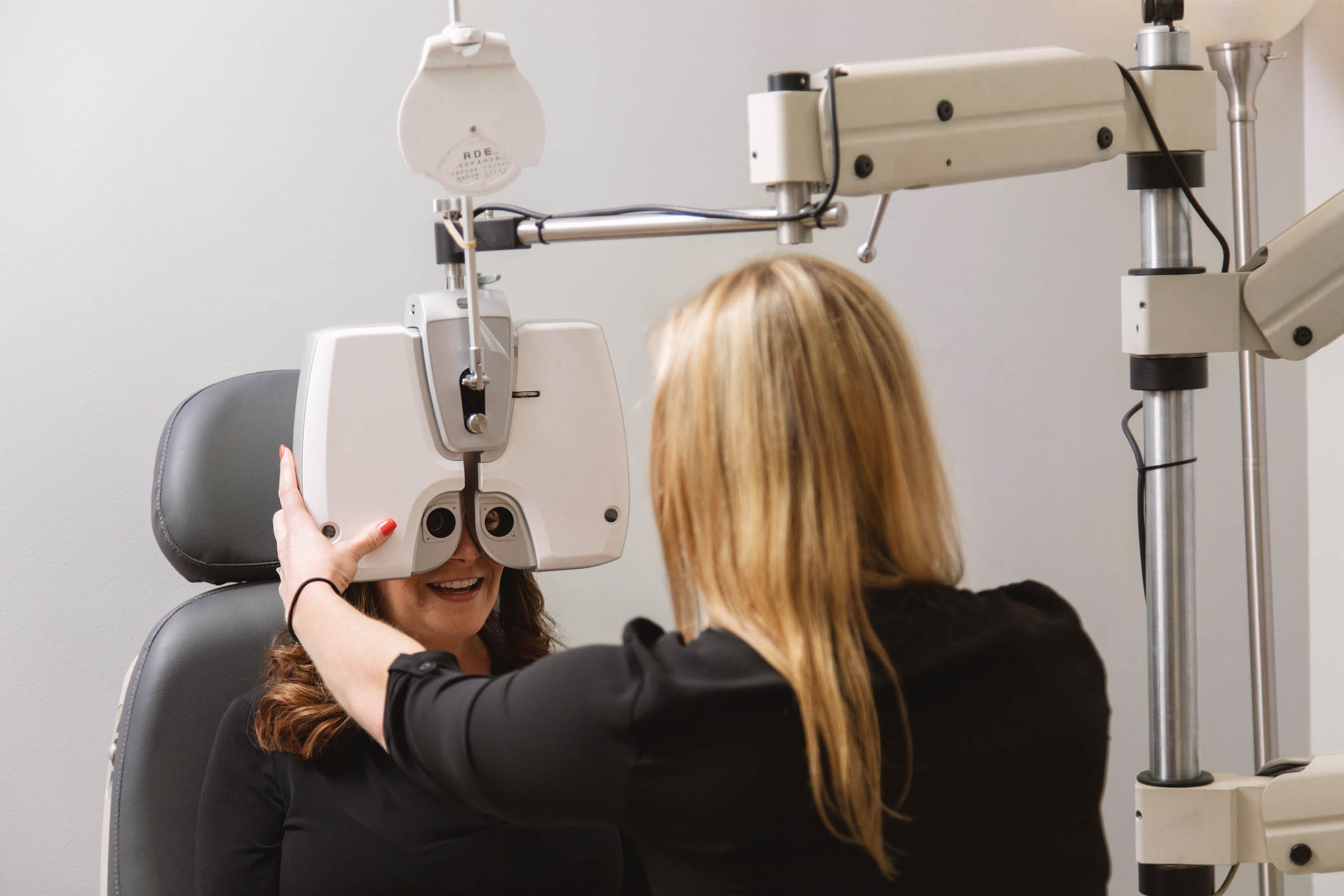
A clear look at the retina.
Dilating drops and retina imaging give your eye doctor a full view of the blood vessels that diabetes can affect.
Keep exploring.
Fast answers.
How often do I need a diabetic eye exam?
The National Eye Institute recommends a dilated eye exam at least once a year for people with diabetes.
Will my eyes be dilated?
Usually yes. Dilation lets the doctor see the whole retina. Bring sunglasses and plan for blurry near vision for a few hours.
Can diabetic eye damage be treated?
Yes. Injections, laser and surgery can help, and treatment works best when problems are found early.
Does type 1 or type 2 matter?
Both types can damage the retina, so everyone with diabetes needs regular eye exams.
Is pregnancy a concern?
Yes. The National Eye Institute says pregnancy raises the risk of diabetic retinopathy and advises a dilated exam as soon as possible.
Book your yearly diabetic eye exam.
Find an eye doctor near you who can check your retina and share results with your care team.
Back to eye care services and treatments
Sources and notes
- National Eye Institute: Diabetic retinopathy
- National Eye Institute: Diabetic eye disease
- American Optometric Association: Diabetic retinopathy
- All Vision Rescue sources
- Exam-room photography is an owned Eye Care Advisors asset approved for use by Vision Rescue. Product names belong to their makers and are listed for information only.
This page is for general education and is not medical advice. Only an eye care professional who has examined you can recommend what is right for your eyes.